By clicking “Accept All Cookies”, you agree to the storing of cookies on your device to enhance site navigation, analyze site usage, and assist in our marketing efforts. View our Privacy Policy for more information.
The SOS 80% Pull-up Method and Why It Works
Build pull-up strength at Skill of Strength with Coach Mike Perry's SOS 80% Method. Discover how conservative targets turn bodyweight reps into 100-pound weighted pull-ups.
By
October 27, 2026


People ask me about pull-ups more than anything else at Skill of Strength.
I recently posted two videos on how I program them, one for bodyweight reps and one for weighted pull-ups. The response was great. Lots of people jumped in with good questions, from other coaches and trainers to people who just want to get their first rep or add a few more.
I wanted to lay out the full framework here so it's simple to follow and implement.
I've used it with youth athletes, pros, experienced adults, and those just starting out, and it works really, really well.
The rep and load targets start conservatively on purpose. People hit them, they build confidence, and they keep coming back to do the work. That’s what gets you better at pull-ups.
The Bodyweight Pull-Up
A pull-up is simple. Hang from a bar with an overhand grip, pull until your chin clears the bar, then lower all the way back down. Switch to an underhand grip and it's a chin-up.
Simple doesn't mean easy, though.
One rep is never enough
Pull-ups are hard because you're moving your full body weight. Even strong people can have trouble getting past a few reps.
But once you get your first one, everyone asks the same thing: "How do I get more?" Five becomes the goal, then ten, and that's where most people get stuck.
How to Get More Bodyweight Pull-Ups
What most people do
There's no shortage of pull-up advice, from coaches and all over the internet. Most of it revolves around max reps every set or a vague "leave one in the tank."
In my experience, going to failure just builds up fatigue. Your reps drop every set, and you walk out feeling like you failed. One of the top comments on my video summed it up quite well: training to failure is a great way NOT to get strong.
What works better is a roadmap. You get a target number for every session, you know exactly what to hit, and therefore, you’re much more likely to hit it.
The SOS 80% Method
This is how we set that target at Skill of Strength, and build on it, session after session. It's simple, it's conservative, and it works.
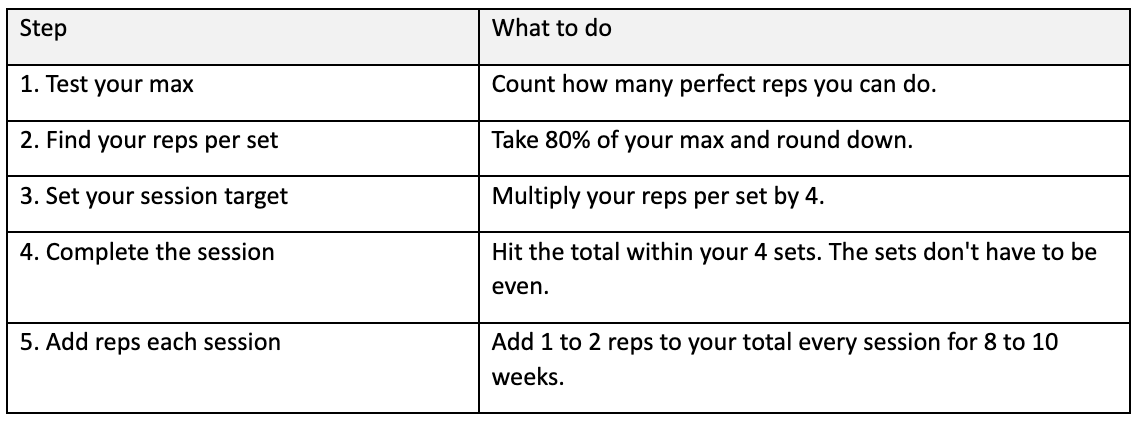
Here’s what that looks like. Say you can do 8 perfect reps: full hang at the bottom, chin over the bar, no kipping. That's 6 reps per set (80% of 8 is 6.4 and you round down), so your session target is 24 reps across 4 sets.
Next session, aim for 25 to 26, and keep adding 1 to 2 reps each session from there. Those small, steady jumps are what move you forward.
Rest 2 to 3 days between sessions, depending on your training experience.
After 8 to 10 weeks, you can retest and run it again with your new max if you want, but you don't have to.
Why it works
The targets are conservative. Starting at 80% means you succeed session after session, and that builds confidence.
You keep progressing, even on off days. Some days you'll feel great and some days you won't. Since your target starts at 80% of your max, you can usually still be able to hit it on a bad day, so your progress doesn't stall.
Anyone can use it. It's easy to follow, it scales, and you can repeat it, whether you're a young athlete or an adult just starting out. The formula stays the same, and only the numbers change.
Taking It to the Next Level: Weighted Pull-Ups
You've put in the work, and you can hit a solid number of bodyweight pull-ups every set.
So when should you start adding weight?
There's no magic number, but 10 perfect pull-ups is a good target. Once your form holds up through the last rep of several sets, start light and build from there.
The principles of The SOS 80% method still apply: start conservative, never miss reps, quality over quantity, and plenty of rest.
What changes is the variable you adjust. With bodyweight pull-ups, the load stays the same and you add reps. With weighted pull-ups, you cap the reps and add load.
I've used this to get several athletes to a 100-pound weighted pull-up, and some even heavier.
The whole process is built around one rule: never do more than 10 total weighted reps in a session. Too much volume with weighted pull-ups is a great way to end up with sore elbows and cranky joints.
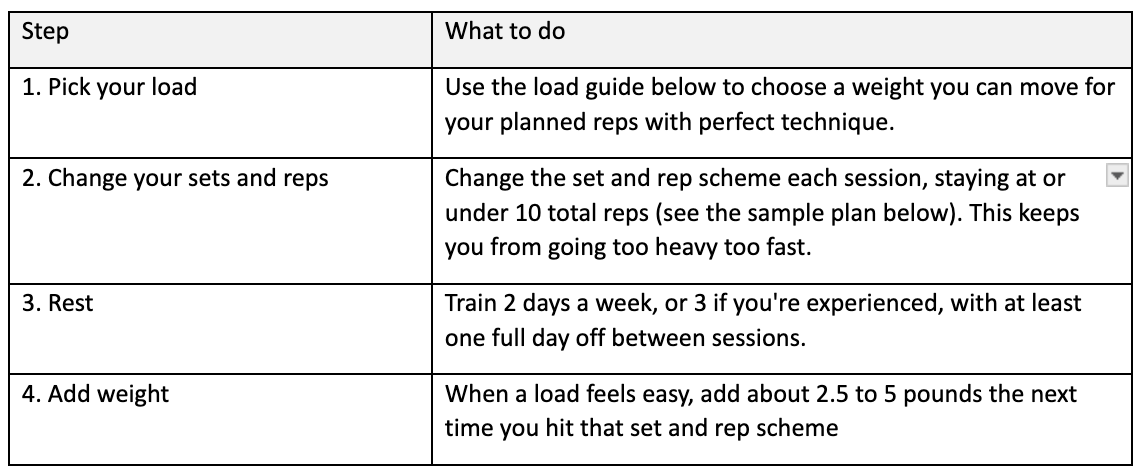
Picking your load
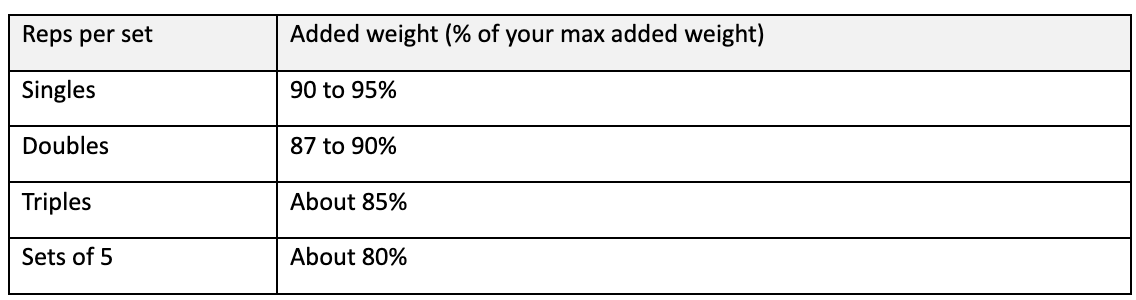
2 × 5, leave 1 to 2 reps in reserve. On heavy singles, 0 to 1. Get close, but don't fail.
Do 1 to 2 lighter warm-up sets before your working sets.
Sample 8-session plan
Training 2 days a week, this takes about 4 weeks. At 3 days a week, it's closer to 3.

You don't have to follow this exactly, but this is the idea. Stay at or under 10 total reps, rest between training days, and be smart about your load. Do that and you're going to get really strong.
Things to consider
Watch your elbows. If your elbows are sore, check your setup. Start every rep from a straight-arm hang, not with your elbows already bent. If you can't fully rotate your forearms into an overhand position, you may be putting extra stress on your elbows. If the pain sticks around, get it checked out.
This was built for max strength. The most-liked question on the video was whether this is for strength or size. The answer: the weighted work is about pulling heavier loads, not building muscle size (hypertrophy).
You can add volume safely. Bodyweight pull-ups and dips are both fine to add. Do your bodyweight pull-ups after your weighted sets. If max strength is the goal, put weighted dips on a separate day.
For Coaches
This is super easy to program for one client or a whole team. Everyone uses the same formula and gets their own number.
Be strict on the test. Your targets are only as good as your test. Only count perfect reps.
Expect the drop-off. I've received feedback that people can do 12 reps on their first set and barely get 10 on their second, even with 90+ seconds of rest. That's really common with bodyweight pulling.
That's why we start at 80% and use a session total instead of chasing max reps every set. Athletes can split up the reps however they need to and still hit the number.
Autoregulate the load. For weighted work, use the percentages as a starting point and adjust based on how the reps are moving that day. Mike Tuchscherer's work on autoregulation is a great resource.
Keep them successful. Give people numbers they can hit and they'll keep showing up. That's where the progress comes from.
The Bottom Line on Pull-Ups
This works. One follower got to a 143-pound weighted pull-up at 154 pounds bodyweight in a year and a half doing exactly this.
Whether you're going for your fifth rep or adding your first plate, the recipe is the same: conservative numbers, perfect reps, plenty of rest, and small jumps every session.
Steal this, try it yourself or with your clients and athletes, and let me know how it goes.
- Coach Mike